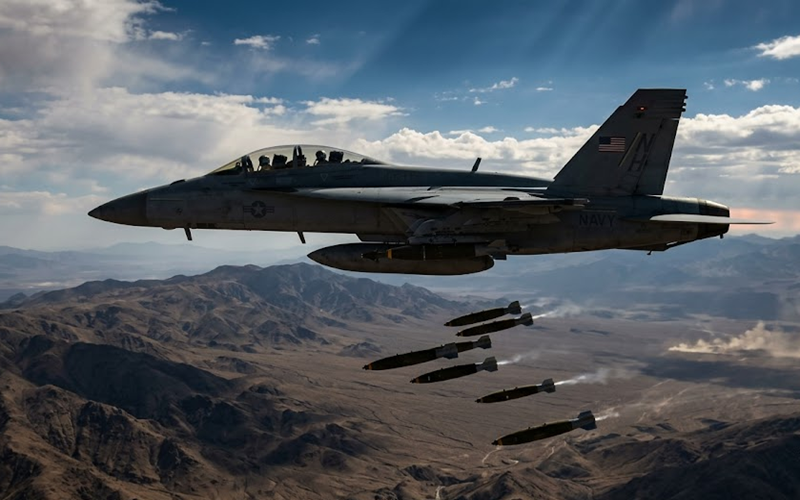
WASHINGTON / TEHRAN — The U.S. military launched a fresh wave of high-intensity airstrikes across Iran, responding directly to what officials described as a preemptive offensive by Tehran targeting American positions.
According to a statement released by U.S. Central Command (CENTCOM), the operations began late Wednesday night. CENTCOM characterized the bombardment as a "powerful response" triggered by Iranian missile and drone barrages launched a day earlier. Those Iranian strikes were directed at American military installations in Jordan as well as maritime shipping lanes traversing the vital Strait of Hormuz.
Escalation Following Bilateral Clashes
The renewed air campaign breaks a brief, multi-day lull in hostilities during which tentative diplomatic discussions were rumored to be taking place.
Addresssing reporters from the White House, U.S. President Donald Trump warned of swift action, stating that Washington intended to respond forcefully after Iranian forces initiated the latest round of attacks.
This direct action against Iranian soil comes on the heels of joint U.S.-Saudi airstrikes in eastern Iraq. Those raids targeted logistical facilities and armories operated by Iran-aligned proxy groups accused of orchestrating over 30 drone strikes against regional targets in recent days.
Iraqi security officials reported at least 20 casualties among the Popular Mobilization Forces (PMF) following the coalition operation.
Iran and Proxies Claim Strikes in Jordan and Gulf Waterways
Tehran's Islamic Revolutionary Guard Corps (IRGC) acknowledged the engagement, confirming it had directed attacks at a U.S. airbase and command structure inside Jordan. Iranian military commanders cited past American actions in the region as justification for the offensive.
Concurrently, naval units affiliated with the IRGC claimed responsibility for intercepting three commercial oil tankers in the Strait of Hormuz, alleging that the vessels had deviated into unauthorized transit corridors and disregarded official warnings.
Expanded Regional Footprint
The conflict—which initially flared five months ago when combined U.S. and Israeli forces targeted Iranian infrastructure—shows no signs of immediate resolution, despite earlier administration assessments suggesting a brief operational timeline.
While Iraqi officials expressed strong disapproval over the strikes on PMF positions within their borders, U.S. leadership maintained that actions taken in neighboring territories were coordinated with local authorities to mitigate ongoing security threats.
Meanwhile, regional energy routes remain severely impacted, pushing global oil markets higher as maritime tensions in the Gulf escalate once again.