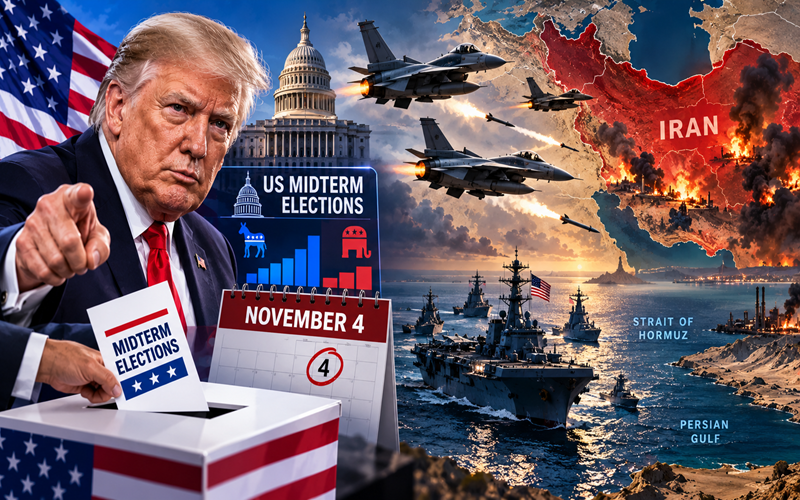
WASHINGTON/DOHA, October 31, 2026: The United States has reportedly alerted its Gulf allies to the possibility of renewed military strikes against Iran as early as November 4, immediately following the American midterm elections, even as diplomatic efforts to prevent another confrontation appear to be gaining momentum.
According to a report by MSNOW, Washington has informed senior officials in Gulf Arab countries that a fresh military operation against Iran could take place shortly after the November 3 elections.
The report, citing three senior Gulf officials familiar with the discussions, suggested that any potential strikes could be limited in duration but involve intense military action.
The reported warning has raised concerns among regional governments about possible Iranian retaliation and the risk of a wider conflict across the Middle East.
At the same time, separate reports indicate that indirect negotiations between Washington and Tehran have made progress, with an American delegation expected to participate in direct discussions in the Qatari capital, Doha.
The parallel developments highlight the uncertain direction of US-Iran relations as Washington maintains military pressure while diplomatic mediators attempt to secure an agreement.
Gulf Governments Concerned About Possible Retaliation
According to the MSNOW report, Gulf Arab governments have urged the United States to avoid further military escalation, fearing that renewed attacks could provoke Iranian retaliation against American military installations and other targets across the region.
The reported possibility of a military operation beginning on November 4 has intensified concerns among countries that host US military facilities.
One Gulf official indicated that some regional governments might oppose the use of American bases on their territory for operations against Iran.
Such opposition could complicate military planning and expose differences between Washington and its regional partners over how to address Iran's nuclear programme and security activities.
The United States has not carried out strikes against Iran since September 1, according to the report.
President Donald Trump had previously indicated that further military action would be delayed until after the midterm elections.
However, the administration has not publicly confirmed that a new operation has been authorized.
Responding to questions about the reported plans, a White House official declined to discuss possible military preparations.
The official said the administration does not comment on sensitive operational matters and emphasized that Trump continues to consider all available options to prevent Iran from obtaining nuclear weapons.
The remarks leave open the possibility of military action without confirming that an attack is imminent.
Diplomatic Breakthrough Reported in Doha Negotiations
Despite the warnings of possible strikes, diplomatic efforts involving Qatar and Pakistan appear to have produced progress in negotiations between the United States and Iran.
Qatari newspaper Al-Araby Al-Jadeed reported that mediators had achieved a breakthrough in indirect discussions, potentially opening the way for direct engagement between American and Iranian representatives in Doha.
Citing sources familiar with the mediation process, the newspaper said preliminary understandings had been reached on several issues that have complicated relations between Washington and Tehran.
These reportedly include aspects of Iran's nuclear programme, freedom of navigation through the Strait of Hormuz and possible financial incentives for the Iranian government.
The report also suggested that China and Russia could serve as guarantors of an eventual agreement.
However, the precise terms of the proposed arrangements have not been disclosed, and there has been no independently confirmed announcement of a comprehensive agreement.
The reported diplomatic progress comes as regional governments seek to prevent another round of hostilities.
Qatari Mediators Hold Extended Talks in Tehran
According to Axios, Qatari mediators conducted more than 12 hours of discussions with Iranian officials in Tehran on Friday.
The negotiations were reportedly aimed at reducing tensions and preventing further US military strikes following the American elections.
After the discussions, Iranian negotiators reportedly travelled with the Qatari delegation to Doha, where additional talks were expected to take place on Saturday.
An American delegation was also expected to join the discussions, potentially marking a significant development in efforts to establish direct communication between Washington and Tehran.
The involvement of Qatar and Pakistan reflects the importance of regional mediation in managing tensions between the two countries.
Both governments have reportedly been working to narrow differences and identify arrangements acceptable to the United States and Iran.
The potential participation of China and Russia as guarantors could introduce a broader international dimension to the diplomatic process.
Nevertheless, the reported understandings remain preliminary, and major questions persist over implementation, verification and the extent of concessions each side would be willing to make.
Strait of Hormuz Among Key Issues
One of the issues reportedly discussed during the negotiations concerns navigation through the Strait of Hormuz, a strategically important maritime passage connecting the Persian Gulf with international shipping routes.
The waterway is vital for global energy trade, making its security a major concern for oil-exporting Gulf countries and international markets.
Any military confrontation involving Iran could threaten commercial shipping and disrupt energy supplies.
The reported negotiations have therefore included discussions about maintaining maritime access and reducing the possibility of interruptions to navigation.
Financial incentives for Tehran have also reportedly been considered as part of a broader diplomatic arrangement.
Such measures could provide Iran with economic benefits in exchange for commitments related to its nuclear activities and regional security.
However, no detailed framework has been publicly confirmed.
Egypt Warns Against Further Escalation
Egypt has expressed serious concern over the possibility of renewed military confrontation between the United States and Iran.
Speaking at the IISS Manama Dialogue security summit in Bahrain, Egyptian Foreign Minister Badr Abdelatty warned that another round of hostilities could have consequences more severe than previous confrontations.
He said he was deeply concerned that further escalation would cause greater destruction and produce significant regional repercussions.
His remarks came amid reports that Gulf governments had been warned about the possibility of American strikes after November 3.
Egypt's concerns reflect broader fears among Middle Eastern governments that another military confrontation could destabilize the region and undermine diplomatic efforts.
The potential consequences extend beyond the countries directly involved, particularly because of the region's importance to international energy markets and maritime trade.
Saudi Arabia Reports Drone Interception
Regional security concerns were further highlighted by Saudi Arabia's announcement that its air defence systems had intercepted a hostile drone in the Riyadh region.
Turki al-Malki, spokesman for the Saudi-led military coalition involved in the conflict with Yemen's Houthi movement, said the drone had been detected and destroyed.
According to the spokesman, debris from the interception fell to the ground without causing injuries.
Saudi authorities did not indicate in the reported statement that the incident was connected to the possible American strikes against Iran.
Nevertheless, the interception occurred amid heightened regional tensions and continuing concerns about drone and missile threats.
The incident underscored the security challenges facing Gulf countries as they seek to prevent a broader confrontation.
Washington Faces Military and Diplomatic Choices
The reports of potential military action and diplomatic progress have created a complex situation for the Trump administration.
On one hand, Washington is reportedly maintaining pressure on Tehran through warnings of possible strikes.
On the other, American participation in direct negotiations could provide an opportunity to reduce tensions and address disputes through diplomacy.
Gulf governments appear particularly concerned about the risks of military escalation, given their geographic proximity to Iran and the presence of American military installations in several countries.
The reported discussions in Doha could become an important test of whether the two sides can reach an understanding before the possible November 4 military window.
For now, neither a renewed American attack nor a final diplomatic agreement has been confirmed.
The coming days could prove decisive in determining whether Washington and Tehran move towards a negotiated settlement or another dangerous phase of confrontation in the Middle East.