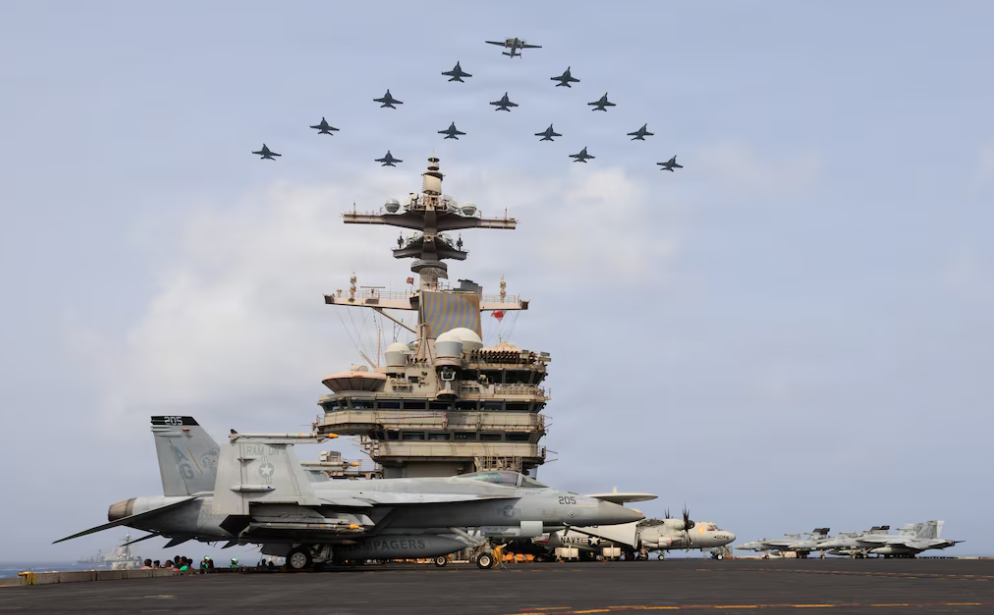
WASHINGTON / TEHRAN— United States forces executed a targeted strike on Iranian missile infrastructure on Larak Island Sunday, disrupting preparations by the Islamic Revolutionary Guard Corps (IRGC) to deploy mine-carrying rockets into the Strait of Hormuz.
The pre-emptive military action triggered a swift counteroffensive from Tehran, which launched a series of ballistic missile and drone attacks against U.S. operational facilities in Jordan.
Pre-Emptive Action in the Strait of Hormuz
According to U.S. Central Command (CENTCOM), military intelligence identified IRGC units preparing to fire rockets carrying naval mines into key shipping channels near Larak Island. The operation aimed to prevent a re-mining of the critical waterway following recent U.S. Navy mine-clearing operations.
-
Targeting Threat Assets: American forces destroyed two missile launch sites positioning sea-mine delivery systems.
-
Protecting Trade Routes: CENTCOM reaffirmed that the strike was a "limited, precise action" taken to guarantee the free movement of global maritime commerce and safeguard commercial mariners.
Iranian Counter-Strike and Air Defense Interceptions
Hours after the Larak Island strike, the IRGC claimed responsibility for launching a combined barrage of ballistic missiles and unmanned aerial vehicles targeting U.S. military installations inside Jordan. State media outlets reported that the offensive targeted technical infrastructure, fighter jet positions, and maintenance hangars at Al-Azraq Air Base and King Hussein Air Base.
Jordanian defense networks intercepted eight incoming missiles that breached national airspace. Enhanced air defense systems—including Patriot and THAAD missile defense batteries—neutralized nearly all incoming projectiles, resulting in no major impacts or operational disruptions to the facilities.
Escalating Sanctions and Global Market Reactions
The military exchange coincides with intensifying financial pressure on Tehran. U.S. Treasury Secretary Scott Bessent announced plans to roll out new weekly sanctions, primarily targeting international banking networks facilitating Iranian capital access.
The news of the strikes immediately impacted global energy markets. Brent crude futures jumped over 2.5% to cross $90 per barrel during early trading, reflecting investor anxiety over potential supply disruptions through the Strait of Hormuz—where crude exports had recently averaged 6.7 million barrels per day.