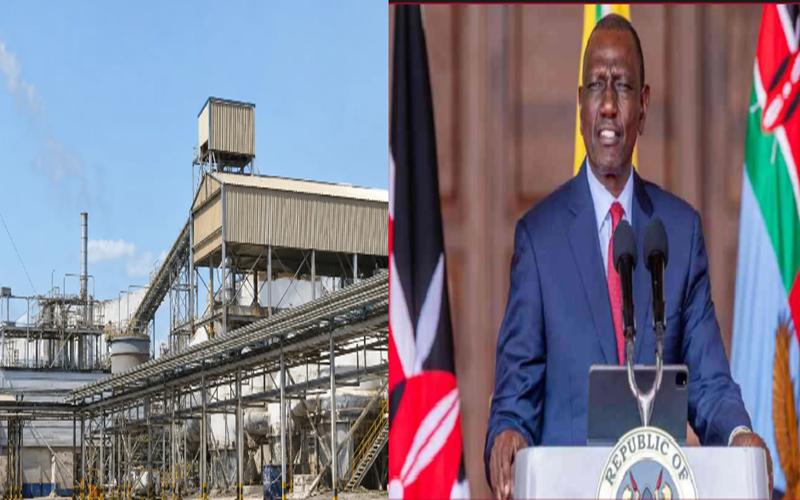
NAIROBI, Kenya — Relations between the Kenyan government and Indian industrial conglomerate Tata Group have reached a critical juncture following President William Ruto’s public order directing Tata Chemicals to immediately halt operations at Lake Magadi and exit the country.
The directive has ignited a sharp response from the Indian firm, which vigorously denies claims of regulatory non-compliance.
Ruto Calls Out Raw Resource Exports
Addressing a public gathering in Kajiado County, President Ruto criticized the operational model of Tata Chemicals Magadi Ltd (TCML), asserting that Kenya has derived negligible economic gain despite a century of mineral extraction at the site.
-
Focus on In-Country Value Addition: President Ruto condemned the long-standing practice of shipping raw soda ash overseas for processing. He insisted that host regions must house processing infrastructure to foster domestic manufacturing.
-
New Investors Targeted: The administration announced plans to award the concession to two incoming investors required to construct local glassmaking and industrial chemical manufacturing facilities.
-
Regulatory Shutdown: The expulsion order follows a July 28 directive from the Ministry of Mining, Blue Economy and Maritime Affairs that suspended TCML’s mining rights, citing disputed royalty payments and statutory compliance issues.
Tata Asserts Full Compliance, Points to Document Filings
In a detailed regulatory disclosure submitted to Indian stock exchanges, Tata Chemicals pushed back against the allegations:
-
Full Statutory Submission: TCML confirmed that on August 11, it delivered a complete portfolio of reports and data satisfying all technical queries raised in the ministry's suspension notice.
-
Awaiting Official Direction: The firm emphasized that it is officially waiting for the ministry to finish reviewing its filings and issue standard regulatory guidance.
-
Engagement via Legal Channels: While reiterating its respect for Kenya's sovereign institutions, Tata stated it will defend its commercial interests through official regulatory and judicial channels.
-
Local Economic Contributions: Operating at Lake Magadi since acquiring UK-based Brunner Mond Group in 2005, Tata highlighted its role as a key regional employer with 500 direct workers and a provider of essential water, healthcare, and educational infrastructure to 30,000 local residents.
Industry & Local Political Impact
The dispute over Lake Magadi—one of the world's richest natural trona deposits—reflects a growing wave of resource nationalism across Africa, where governments are increasingly insisting on domestic processing over raw commodity exports.
The decision has also drawn friction domestically, with Kenyan opposition figures raising concerns over immediate job losses, supply disruptions to industrial raw materials, and the sudden displacement of a established major exporter.