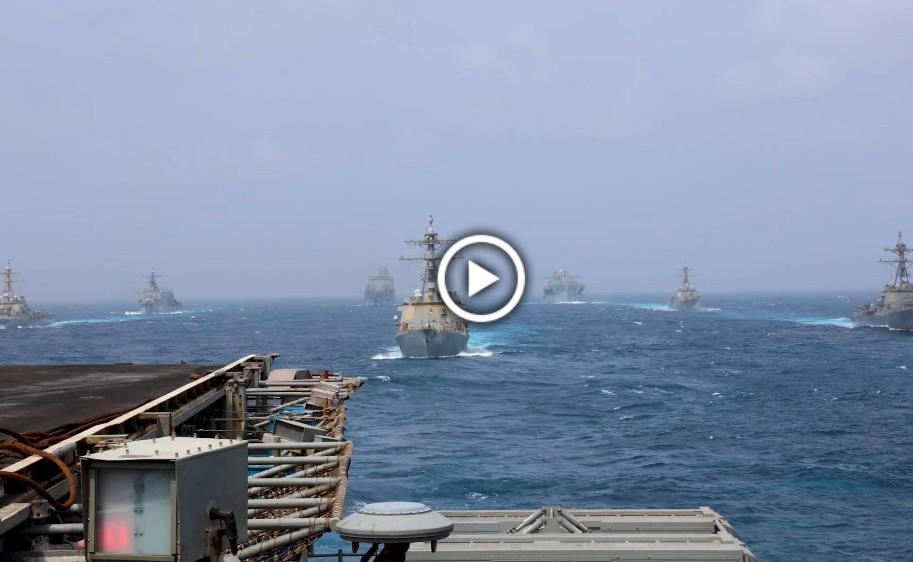
TEHRAN / WASHINGTON — Teheran launched retaliatory missile and drone operations targeting U.S. military installations across the Middle East following American air strikes in southern Iran that reportedly struck a civilian gathering, according to Iranian state media and regional officials.
U.S. Strikes Hit Civilian Area in Hormozgan
The U.S. Central Command (CENTCOM) confirmed it initiated fresh air strikes against targets associated with Iran's Islamic Revolutionary Guard Corps (IRGC). Washington cited recent IRGC aggression against commercial vessels navigating the Strait of Hormuz and threats to U.S. personnel in the region as the justification for the military action.
According to Iranian state outlets and the Iranian Red Crescent , missile fragments struck a home hosting a wedding ceremony in Kuhestak, located within Sirik County in southern Hormozgan province.
-
Casualties: At least four people, including a four-year-old child, were killed, and over 50 others sustained injuries.
-
Impacted Regions: Additional explosions and strike damage were reported in Chabahar, Konarak, Bandar Abbas, Qeshm Island, and civilian infrastructure near Jiroft Airport.
-
Pentagon Response: U.S. Navy Captain Tim Hawkins stated that U.S. forces never deliberately target non-combatants, distinguishing American military protocols from those of the IRGC.
Tehran Launches Counter-Offensive Across the Gulf
In response to the casualties in Sirik, the IRGC announced immediate retaliatory operations against American positions in Jordan, Bahrain, and Kuwait.
-
Jordan: Iranian forces directed a salvo of ballistic missiles toward a U.S. Marine facility near Aqaba. Jordanian defense forces reported intercepting 10 incoming missiles, while three others landed in unpopulated areas, resulting in no reported casualties.
-
Bahrain & Kuwait: Air defense units in Kuwait and Bahrain engaged incoming hostile drones and missiles targeting U.S. installations, including the Sheikh Isa Airbase.
Escalating Regional Tensions
The clash follows the expiration of a June ceasefire agreement intended to end a broader conflict that erupted earlier in the year.
Both nations have reinforced maritime enforcement along the Strait of Hormuz, severely disrupting international shipping lanes and driving up global oil prices.
U.S. President Donald Trump warned that any further Iranian retaliation would provoke strikes at "a much harder and higher level." Meanwhile, Iranian officials maintained that military actions would continue until American forces cease operations in the region.